
This roasted cauliflower and chickpea curry is the kind of weeknight dinner that tastes like it simmered all day—deeply spiced, creamy from coconut milk, and packed with plant-based protein.
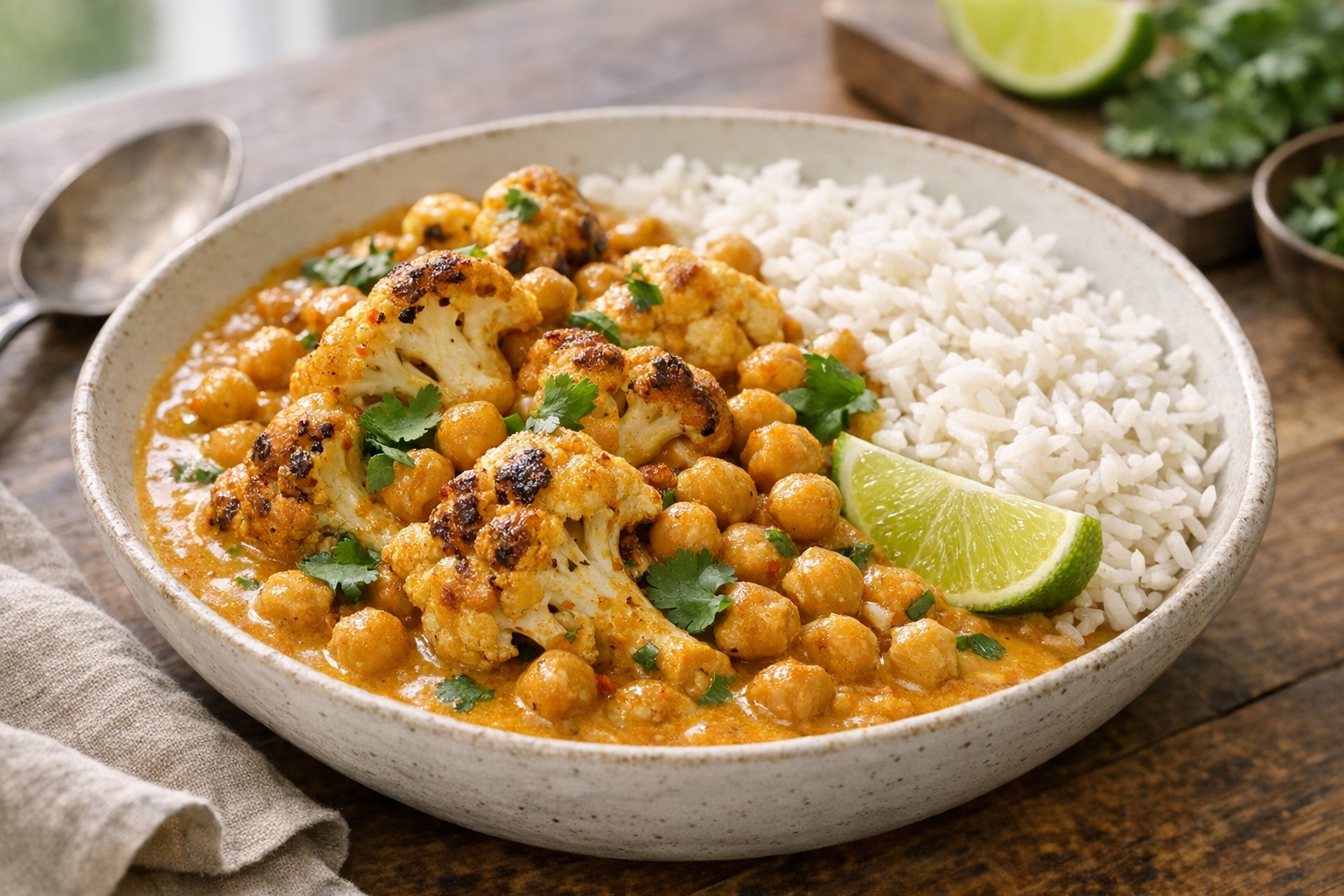
Roasting the cauliflower first is the game-changer here. It caramelizes the edges, adds a lightly smoky flavor, and keeps the florets from turning mushy once they hit the curry sauce. Chickpeas make it hearty, and a quick coconut curry base brings everything together fast.
Why you’ll love this curry
- Big flavor, minimal effort: Roast, simmer, and dinner’s done.
- Meal-prep friendly: The flavors get even better the next day.
- Flexible: Easy swaps for veggies, spice level, and serving options.
- Dairy-free and naturally gluten-free: Just double-check your curry powder blend.
Ingredients you’ll need
- Cauliflower florets
- Canned chickpeas
- Olive oil
- Yellow onion
- Garlic
- Fresh ginger
- Curry powder
- Ground cumin
- Turmeric (optional but great)
- Tomato paste
- Full-fat coconut milk
- Vegetable broth (or water)
- Salt and black pepper
- Lime juice
- Fresh cilantro (optional)
How to make roasted cauliflower and chickpea curry
1) Roast the cauliflower. Heat the oven to 425°F. Toss cauliflower florets with olive oil, salt, and pepper, then roast until browned and tender-crisp. This usually takes about 20–25 minutes, flipping halfway.
2) Build the curry base. In a large skillet or Dutch oven, sauté diced onion in a little oil until soft. Add garlic and ginger and cook just until fragrant.
3) Bloom the spices. Stir in curry powder, cumin, and turmeric. Let them toast for about 30 seconds to wake up the flavor, then stir in tomato paste to deepen the color and richness.
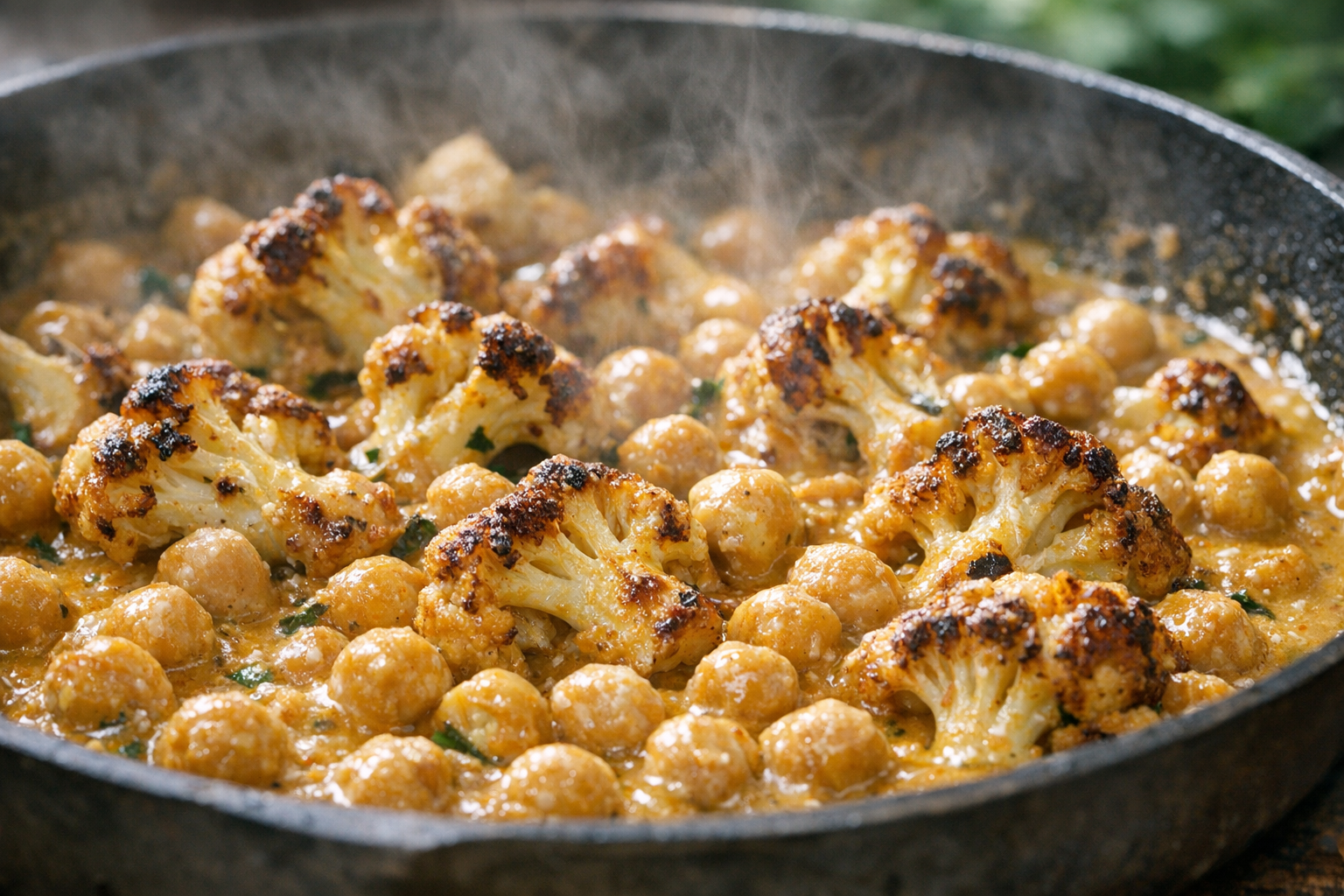
4) Simmer the sauce. Pour in coconut milk and broth. Bring to a gentle simmer and cook a few minutes so it thickens slightly and the flavors meld.
5) Add chickpeas + roasted cauliflower. Stir in drained chickpeas and the roasted cauliflower. Simmer 5–10 minutes, just long enough to warm everything through and let the sauce cling to the veggies.
6) Finish and serve. Season to taste with salt, pepper, and a squeeze of lime. Top with cilantro if you like.
Tips for the best results
- Don’t overcrowd the pan: Spread cauliflower out on the sheet pan so it roasts instead of steaming.
- Use full-fat coconut milk: It makes the sauce thick, creamy, and restaurant-style.
- Control the heat: Add cayenne, red pepper flakes, or a chopped serrano if you want it spicy.
- Thicker sauce: Simmer uncovered a few extra minutes, or mash a small scoop of chickpeas into the sauce.
Serving ideas
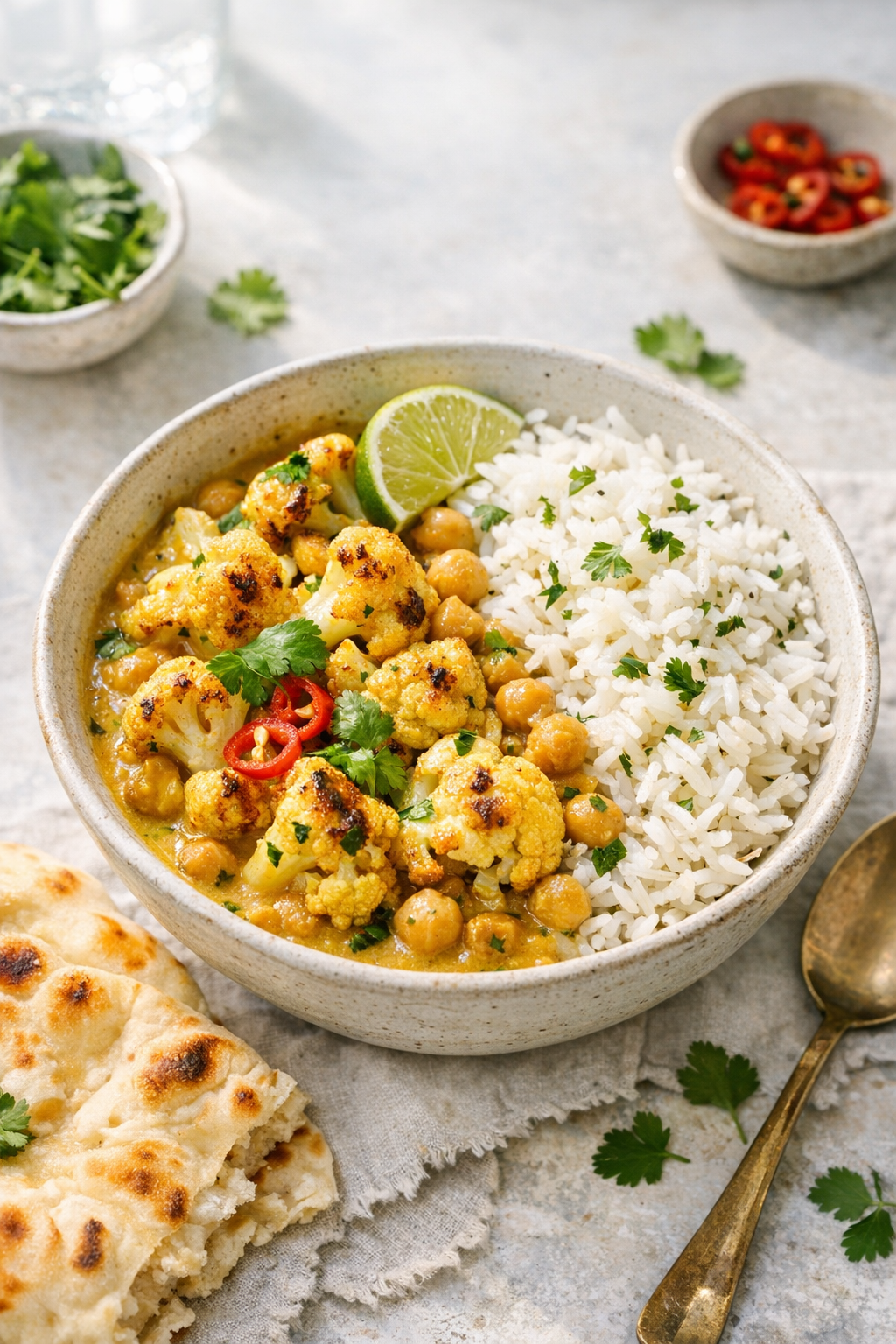
- Steamed basmati rice or jasmine rice
- Brown rice or quinoa for extra fiber
- Naan or pita for scooping
- Finish with sliced scallions, toasted cashews, or a drizzle of chili oil
Storage and reheating
- Refrigerate: Store in an airtight container for up to 4 days.
- Reheat: Warm gently on the stovetop or in the microwave. Add a splash of broth or water if it thickens too much.
- Freeze: Freeze up to 2 months. Thaw overnight in the fridge and reheat slowly (coconut sauces can separate if boiled hard).
Easy variations
- Add greens: Stir in baby spinach at the end until wilted.
- More veggies: Roasted sweet potato, bell peppers, or zucchini work well.
- Extra protein: Add cubed tofu or a second can of chickpeas.
- More tang: Add a spoonful of yogurt (if not dairy-free) or extra lime to finish.
Frequently asked questions
- Can I skip roasting and cook the cauliflower in the sauce? Yes, but roasting adds better texture and flavor. If you simmer it in the sauce, cook just until tender so it doesn’t fall apart.
- Is curry powder spicy? It depends on the brand. Start with less if you’re sensitive to heat, then add cayenne or chili flakes if you want more kick.
- Can I make it ahead? Absolutely. Make the curry base and roast the cauliflower, then combine and reheat before serving.